The smoothhound is one of the most powerful and sporting of the inshore British sharks — a muscular, fast-swimming houndshark that haunts sandy and mixed ground in spring and summer and is one of the most prized catches for boat anglers working these grounds. Note: the common smoothhound (Mustelus mustelus) is now assessed as Endangered, while the starry smoothhound (M. asterias) — the species most commonly encountered by UK anglers — is Near Threatened.
Identification
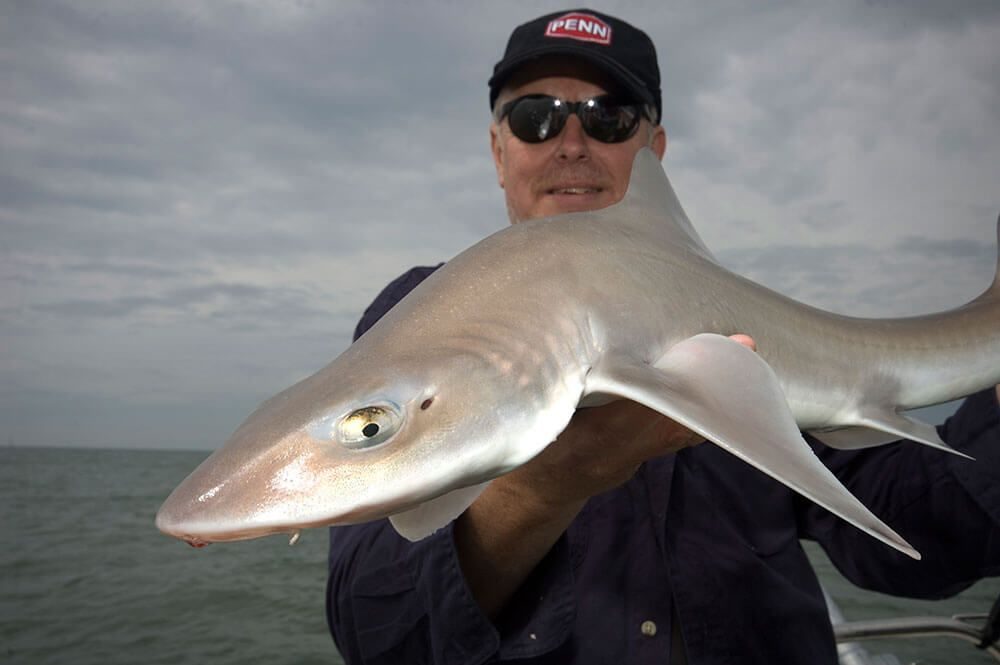
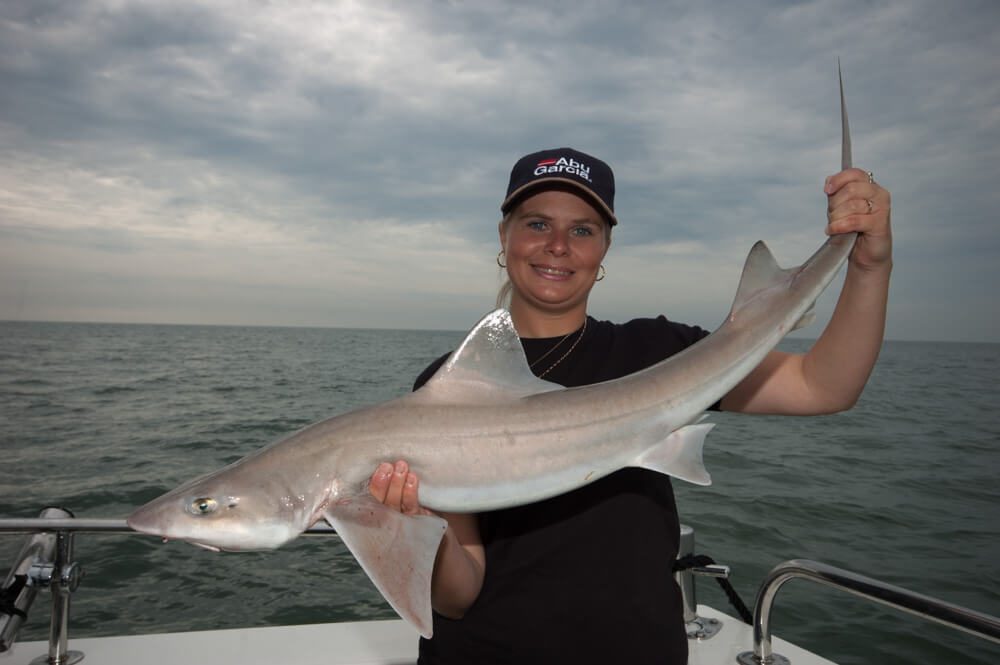
The smoothhound is a moderately built, slender shark with two dorsal fins, no spines, and the typical houndshark outline — pointed snout, moderately large eyes, small mouth. The upper surface is a plain grey to brownish-grey, paler below, without the white spots of the starry smoothhound.
The two species — common and starry smoothhound — are very similar. The common smoothhound has no white spots; the starry smoothhound has a scattering of small white dots. Careful examination is required for confident identification, as the two can be difficult to separate in the hand.
Distribution
Common smoothhound: mainly Iberian and Mediterranean waters, reaching only to Portugal in the north-east Atlantic. Very rare in British waters. Most “smoothhounds” in British and Irish waters are actually starry smoothhounds (M. asterias).
Habitat
Inshore sandy and mixed seabed from the surface to around 100 m.
Diet
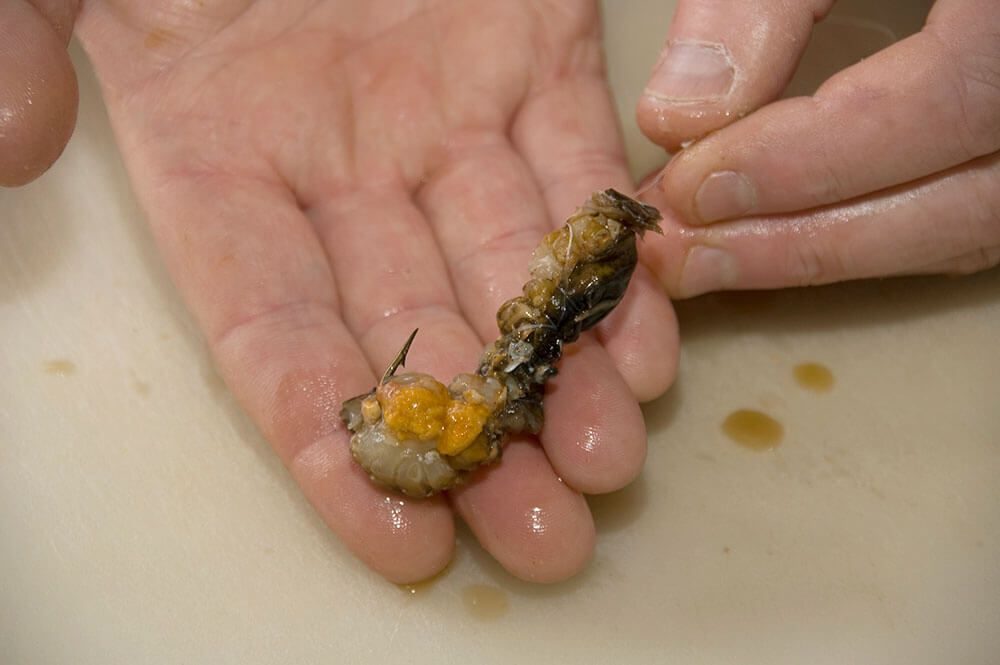
Crustaceans — particularly crabs — and other benthic invertebrates, crushed with the flat, pavement-like teeth.
History
The smoothhound group has been a significant target of shore and boat anglers in the south and south-west of England, particularly from Kent, Essex and the Channel coast. Most UK catches are starry smoothhounds, not common smoothhounds.
Interesting Facts
The teeth are not designed for cutting but for crushing — flat, rounded plates that can crack a crab shell with ease. This gives smoothhounds a diet entirely different from the cutting-tooth sharks.
See our How to Catch Smoothhound guide for tactics and baits.