The blue shark is the most commonly encountered shark in British and Irish offshore waters — a sleek, elegant, blue-toned pelagic hunter that follows warm currents inshore each summer and is the primary target of the UK’s offshore shark angling tradition. Slender, beautiful and built for sustained long-distance travel, it is one of the most widely distributed large sharks in the world. This guide looks at the species itself.
Identification
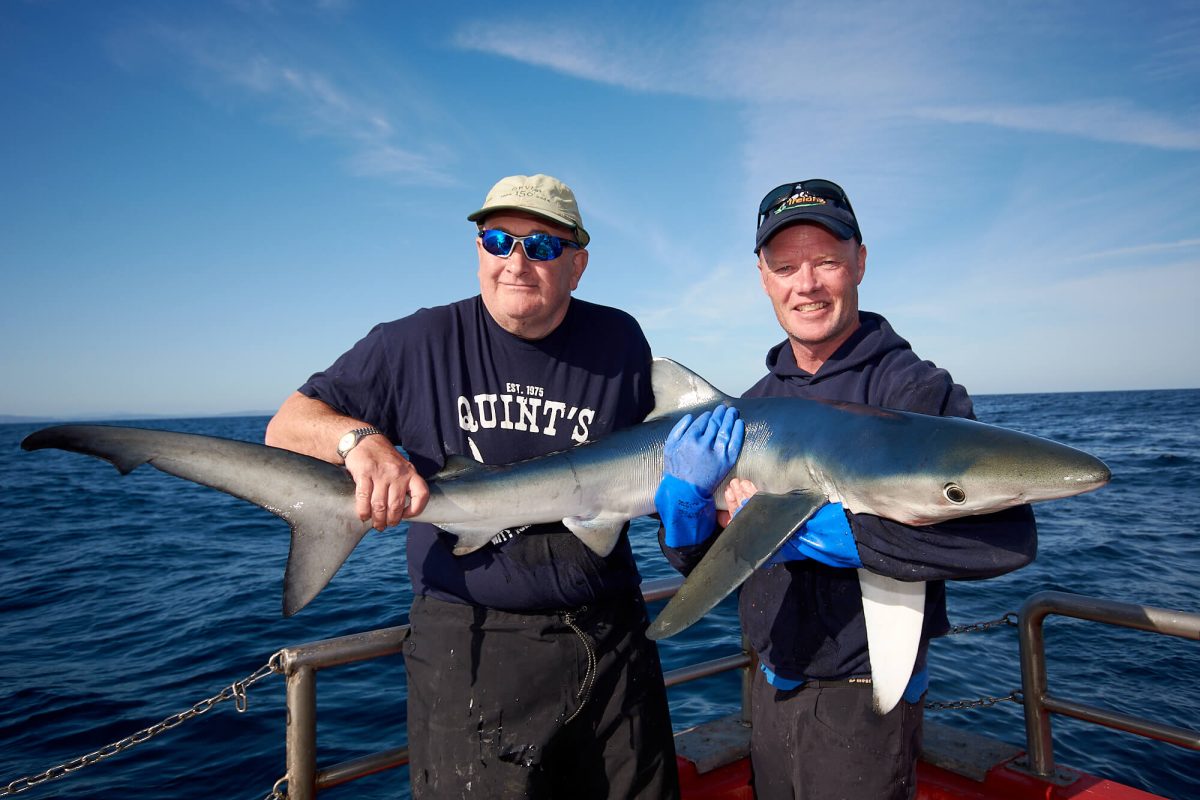
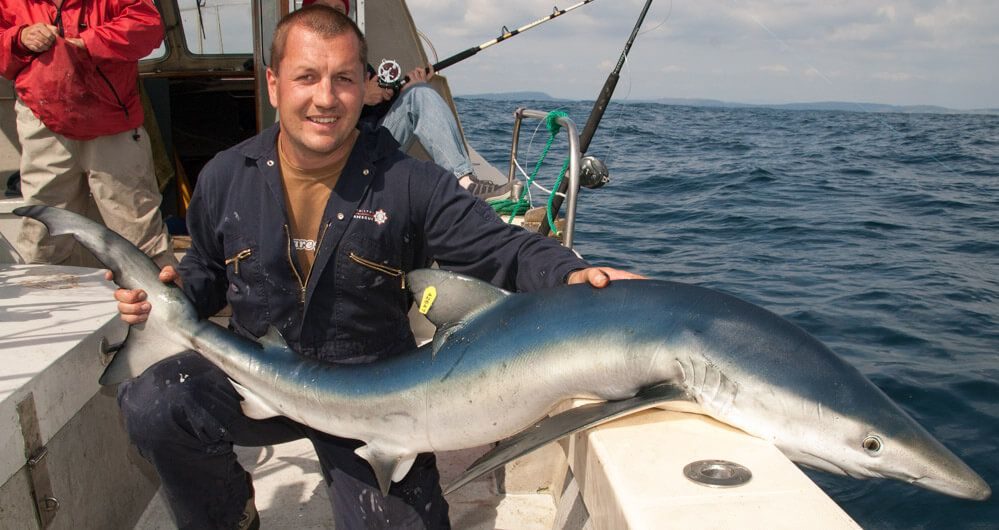
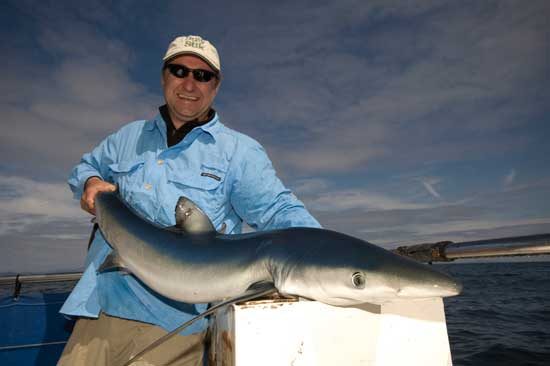
The blue shark is immediately recognisable among British sharks. The body is long, slim and almost cylindrical, tapering to a narrow caudal peduncle. The pectoral fins are very long and sickle-shaped — far longer relative to body length than in any other commonly encountered British shark. The snout is long and pointed.
Colouring is distinctive: the back is a vivid dark blue, the flanks are brighter metallic blue and the underside is white. The combination of the blue colouring, the long pointed pectoral fins and the slender build makes the species unmistakable.
Distribution
One of the most widely distributed large sharks in the world — essentially all tropical, subtropical and temperate oceans. Around the British Isles it is a summer visitor to the south and west, arriving with the warming of offshore Atlantic water from late spring onward.
Habitat
A truly oceanic, pelagic species of open water, found from the surface to around 350 m. Blue sharks make extensive trans-oceanic migrations tracking temperature and prey, and are common in the open Atlantic well offshore.
Diet
Primarily squid and small fish, taken in open water. Blue sharks are active visual hunters, often feeding at night.
History
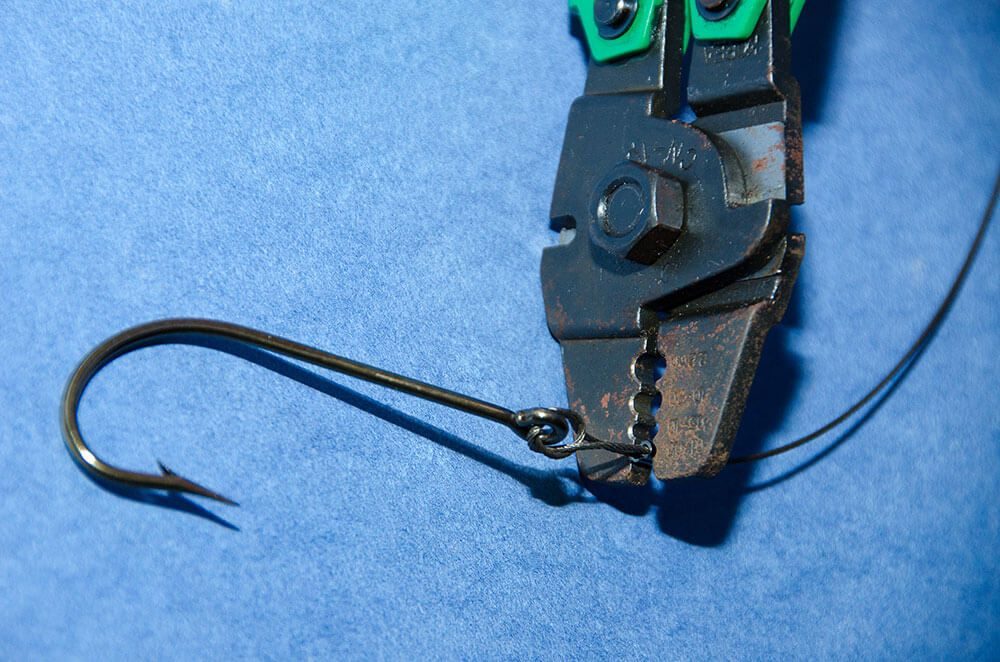
The blue shark has been the target of British offshore shark angling since the development of the sport in Looe, Cornwall and similar south-western ports in the 1950s. It is still the most important species for British offshore shark fishing, caught on shark rigs with rubby dubby and mackerel bait.
Interesting Facts
Blue sharks are highly migratory — tagging studies have shown individual fish crossing the Atlantic from the British Isles to the Caribbean and back. They are viviparous, producing litters of 4–135 pups.
Despite being the most heavily fished shark in the world — hundreds of thousands caught annually in longline fisheries — they remain Near Threatened rather than threatened, partly because of their high reproductive rate compared to most large sharks.
For offshore shark fishing and the best summer marks, see our How to Catch Sharks guide.