The mackerel is one of the most important, most beautiful and most widely caught fish in British and Irish coastal waters — a fast, predatory, shoaling fish that arrives inshore in spring and summer to provide some of the most exhilarating light-tackle sport available from the shore. Hard-fighting, excellent eating and present in enormous numbers at their summer peak, the mackerel is the species that introduces more people to sea fishing than any other. This guide looks at the species itself.
Identification
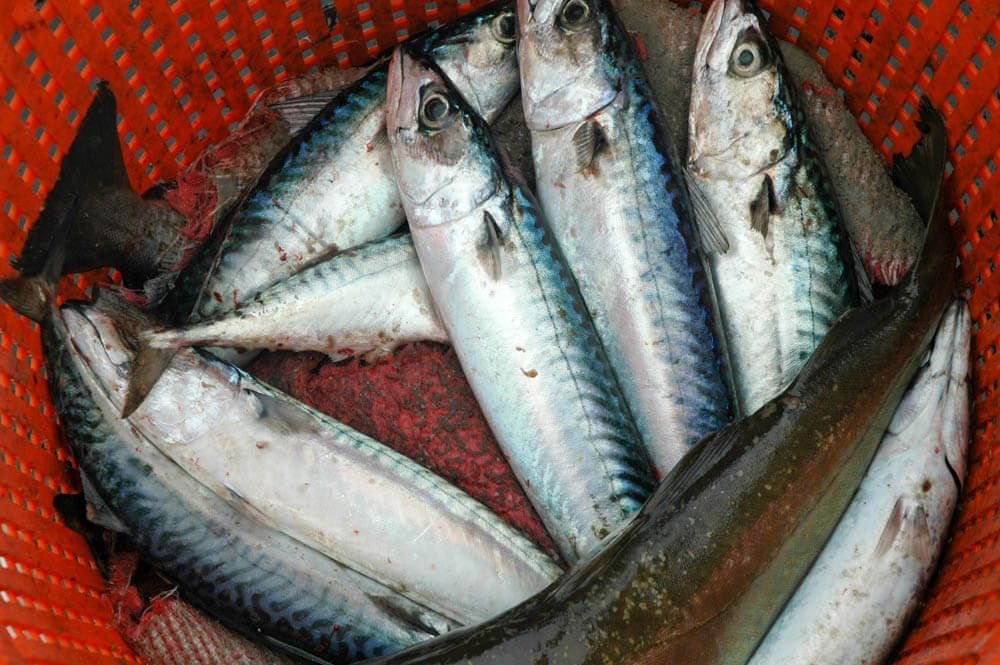
The mackerel is a streamlined, torpedo-shaped fish with a powerful forked tail and two widely spaced dorsal fins. Behind the second dorsal and anal fins are rows of small finlets running to the tail — a characteristic of the family. The head is pointed and the mouth relatively large.
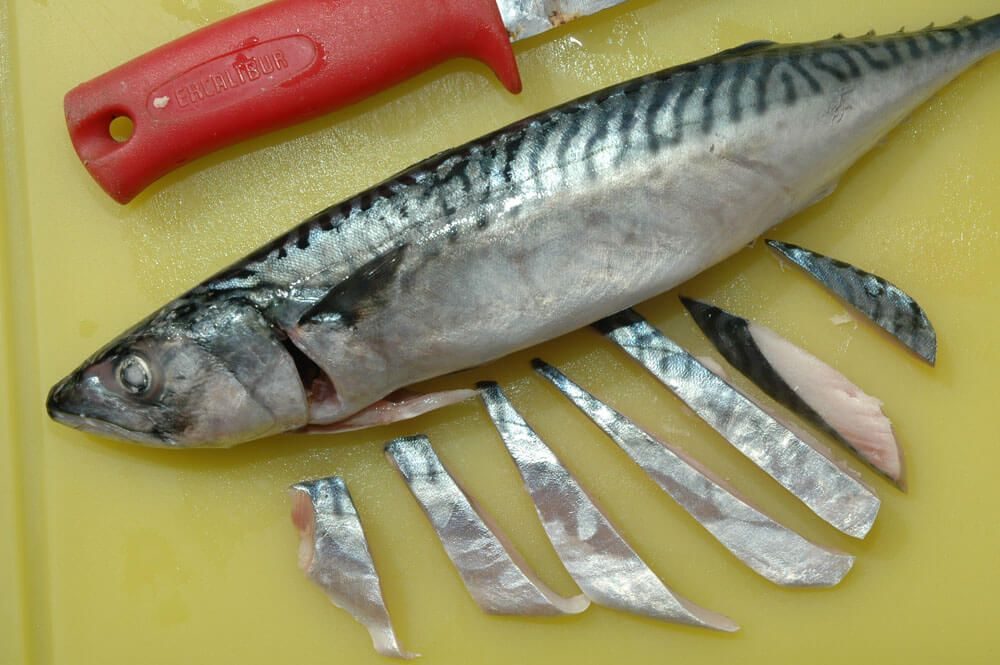
Colouring is one of the most vivid of any British fish: the back is a deep metallic blue-green with a striking pattern of dark, wavy, irregular transverse bars that run across the upper half of the body. The lower flanks and belly are bright silver-white, unmarked. No swim bladder.
Distribution
The Atlantic mackerel has a vast range across the North Atlantic from Labrador and the US East Coast to Iceland, the Norwegian Sea, the North Sea, the English Channel, the Celtic Sea and into the Mediterranean. Around the British Isles it is present on all coasts in season, with the Celtic Sea, Channel and western coast being particularly rich grounds.
Habitat
A pelagic, shoaling fish of open coastal and offshore water. Mackerel move in large schools through the surface and midwater layers, typically between the surface and around 200 m, pursuing prey and migrating seasonally. They move inshore as water temperatures rise in spring, following prey fish into bays and estuaries, and move offshore again in autumn and winter.
Diet
Mackerel are fast, active predators feeding on whatever small fish and invertebrates are most available — sandeels, sprat, juvenile herring, small squid and large quantities of zooplankton. The fine gill rakers allow them to filter zooplankton from the water when baitfish are not available.
History
The mackerel has been one of the most commercially important fish in the North Atlantic for centuries. The North Sea and Celtic Sea purse-seine and pelagic trawl fisheries take hundreds of thousands of tonnes annually. It is managed under international quota agreements but remains abundant.
For the sea angler, feathering for mackerel is the quintessential summer activity on any British or Irish pier or headland.
Interesting Facts
The mackerel has no swim bladder — it must keep moving to avoid sinking. This drives the active, restless lifestyle and makes mackerel one of the fastest and most energetic small fish in the sea.
Mackerel can live to 17 years, though most caught are considerably younger, and they reach sexual maturity at around two years old, which supports rapid population recovery from heavy fishing pressure.
For spinning, feathering and bait techniques, see our How to Catch Mackerel guide.