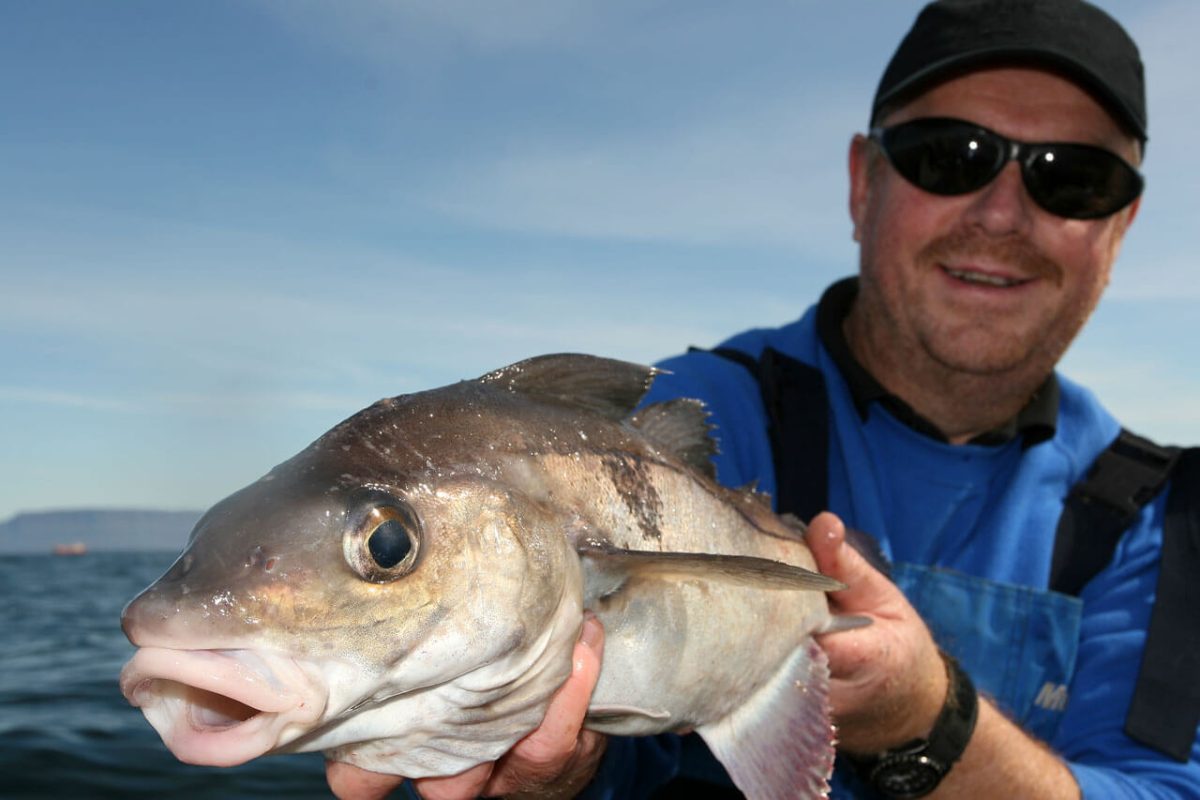
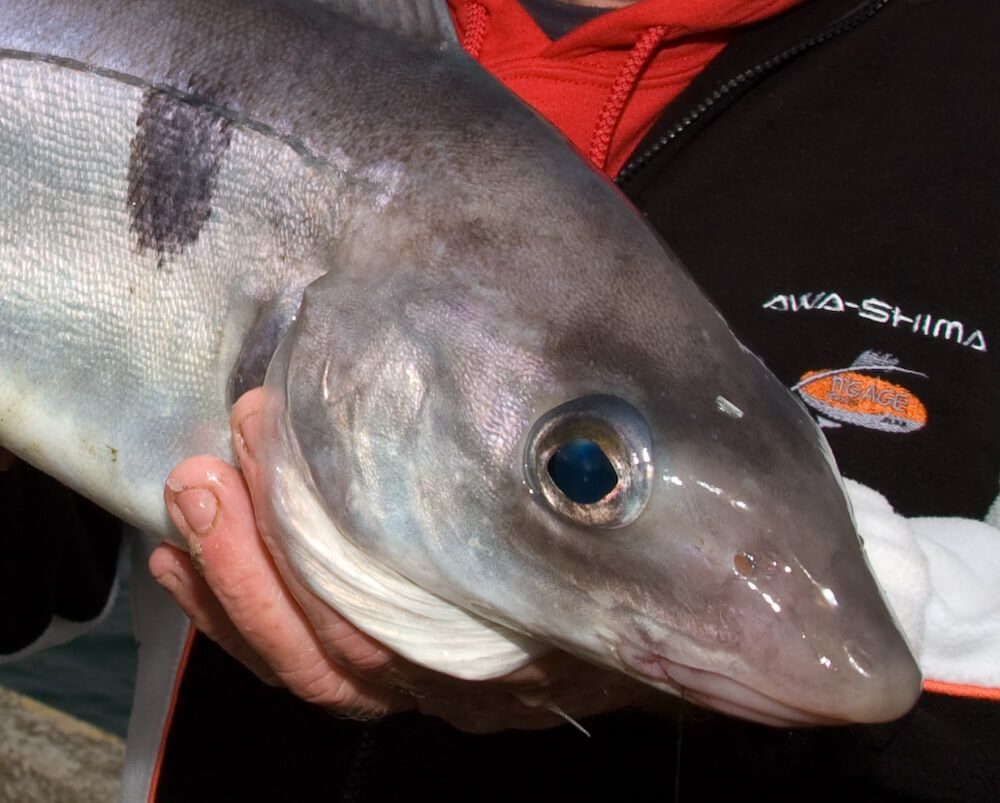
If cod is the king of the British table, haddock is its closest rival – and in much of Scotland and the north it is the fish of choice. To the sea angler it is a clean-feeding, fine-eating member of the cod family, instantly known by the dark thumbprint on its flank. This guide looks at the haddock itself, away from the rods and rigs.
Identification
The haddock is a slimmer, more streamlined fish than the cod, with a smaller mouth and a tapering body. The upper jaw clearly overhangs the lower, and a small barbel sits on the chin.
Like all true cods it carries three dorsal fins, but the first is noticeably tall and pointed, giving the fish a distinctive outline. The lateral line is dark, unlike the pale line of the cod.
The colouring is a dark purplish-grey to greenish-black on the back, fading to silvery-grey flanks and a white belly. The single feature that settles any doubt is the large dark blotch above the pectoral fin, on each side, behind the gill cover – often called the “Devil’s thumbprint” or “St Peter’s mark”.
Distribution
Haddock are found across the North Atlantic and into the adjacent Arctic. In the west they range from the Gulf of Maine and Georges Bank up to Newfoundland, and in the east from the Bay of Biscay northward to Iceland, Norway and the southern Barents Sea.
Around the British Isles they are far more abundant in the north. The waters off Scotland, the northern North Sea and the north of Ireland produce the bulk of them, while haddock become increasingly scarce the further south you fish.
Habitat
This is a true bottom-dwelling species. Haddock live close to the seabed, usually over sand, gravel, mud or broken ground, and generally in deeper water than inshore cod.
They are most commonly found between about 40 m and 200 m, though they can be taken shallower in the north and have been recorded down to 450 m. Northern and Icelandic populations are migratory, moving with the seasons, while some stocks are more settled.
Diet
Haddock feed mostly on the seabed and on the small creatures that live in and on it. The diet is dominated by worms, brittlestars, molluscs, crabs, shrimps and other crustaceans.
Larger fish add small fish and the eggs of herring and other species to the menu, but the haddock never becomes the all-out fish predator that a big cod does. Its smaller mouth keeps it tied more closely to bottom-living food, which is why baited hooks fished hard on the bottom account for most rod-caught fish.
History
Haddock has been a cornerstone of the northern European table for centuries, valued for its clean white flesh and, above all, for how well it takes to smoking. The famous Arbroath smokie and the finnan haddie of north-east Scotland are both built on this fish, and haddock remains the traditional choice in chip shops across Scotland and much of the north of England.
It supports major commercial fisheries on both sides of the Atlantic. Like cod, it suffered heavily from twentieth-century overfishing – which is why the species was assessed as Vulnerable by the IUCN back in 1996 – but several stocks, including those in the North Sea and the Gulf of Maine, have since recovered strongly and are no longer considered overfished.
Interesting Facts
The haddock is the only member of its genus – Melanogrammus contains this one species and no other, making it a true one-off within the cod family.
The dark mark on its shoulder has gathered plenty of folklore. One old tale holds it to be the fingerprint of St Peter, left when he took the tribute coin from the fish’s mouth, which is why the haddock is sometimes called “St Peter’s fish” in northern waters.
A strong year class can transform a fishery overnight. The exceptional 2013 spawning, for example, left an unusually high number of older fish in North Atlantic stocks years later – proof of how much haddock numbers swing on the success of individual breeding years.
Fish can live to around twenty years, though most caught are far younger.
For tackle, marks and methods, see our full How to Catch Haddock guide.