The flounder is the most estuarine and euryhaline of all British flatfish – the only one that comfortably swims far up into fresh water, haunts harbours and tidal creeks, and is as likely to be caught by the river angler as the sea angler. Hardy, adaptable and willing on the right bait, it is one of the most widely accessible flatfish on the British and Irish list. This guide looks at the species itself.
Identification
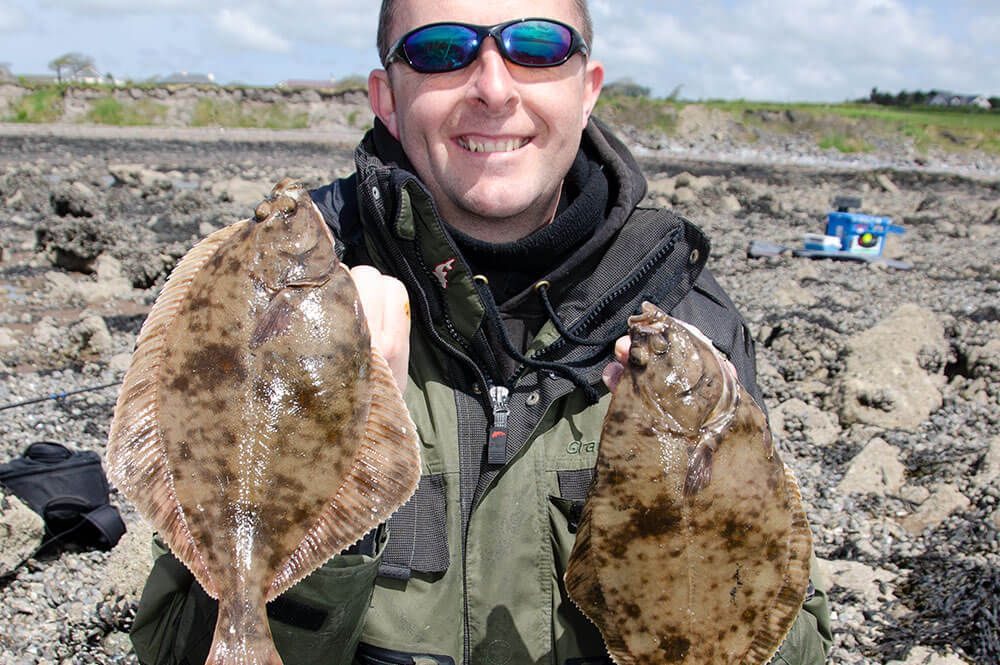
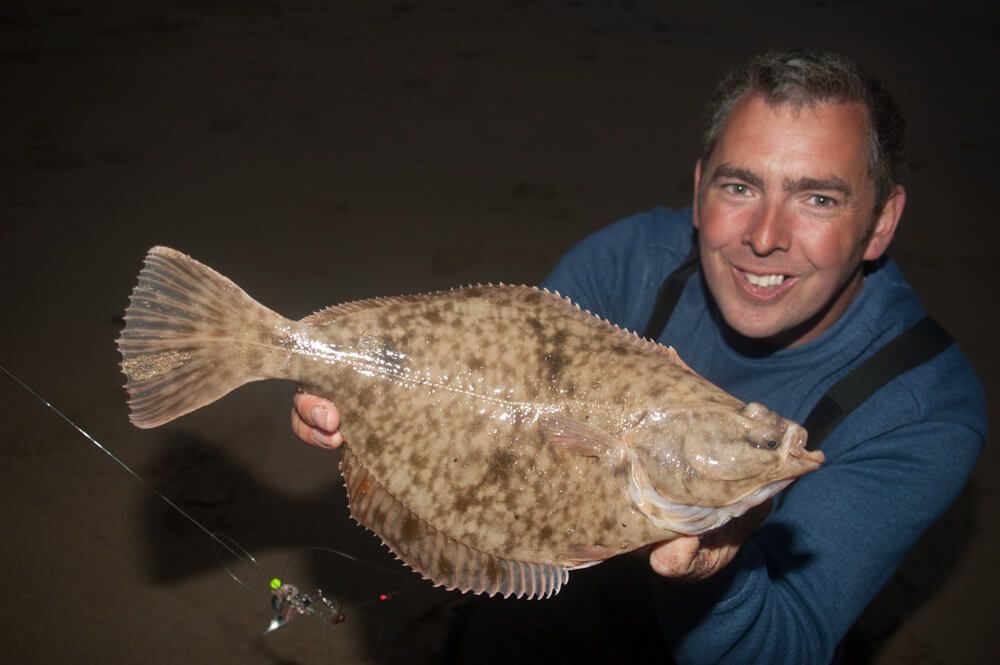
The flounder is typically a right-eyed flatfish – both eyes on the right side – but it is the most variable of the British flatfish in this respect: a small but consistent proportion of individuals are “reversed”, with eyes on the left side. This is essentially unique among British flatfish. Hybrid individuals, produced by interbreeding with plaice, are also known.
The body is oval, the tail slightly concave. The upper surface is a fairly plain dull brownish to greenish-grey, sometimes with indistinct darker blotches, without the vivid orange spots of the plaice. The lateral line makes a distinct arch over the pectoral fin. A row of small bony tubercles runs along the base of the dorsal and anal fins – a distinctive tactile feature, rough to the touch.
Distribution
Found throughout the eastern Atlantic from the White Sea and Norway south to the Mediterranean and Black Sea, and in coastal and estuarine waters all around the British Isles and Ireland. It is introduced adventitiously into North American waters via ballast water.
Habitat
The most versatile British flatfish habitat-wise. Flounder live in estuaries, tidal rivers, brackish creeks, harbours and shallow coastal water from the surface down to around 100 m. They are catadromous – maturing in fresh or brackish water and migrating to the sea to spawn.
Their tolerance of low and even minimal salinity means they are caught well above the tidal limit in rivers, a habit of no other British marine flatfish.
Diet
A bottom-feeding opportunist, taking worms, small crustaceans, molluscs, sandhoppers and small fish from the seabed and the mud of tidal creeks. Ragworm is a standout bait because it forms a natural and important part of the diet in estuarine habitats.
History
The flounder has been fished and eaten for centuries, particularly in the tidal rivers and estuaries of England and Wales where they were traditionally caught in fixed traps and nets as well as on hook and line. It is a modest table fish – perfectly edible but not highly rated compared to plaice or lemon sole.
For the sea angler it is a reliable winter and spring target in estuaries, and its upstream range means it is encountered by freshwater anglers who are surprised to find a sea fish on their hook.
Interesting Facts
The flounder’s tolerance of fresh water is among the highest of any flatfish in the world. Individual fish are regularly caught miles above the tidal limit and have been recorded in entirely fresh water.
The reversed-eye individuals – consistently present in most populations – are thought to result from disruption during the larval metamorphosis that brings both eyes to one side during development. Why this persists in a proportion of the population when it presumably reduces camouflage efficiency is not fully understood.
For estuarine tactics and bait, see our How to Catch Flounder guide.