The dab is one of the most obliging and reliably caught fish on the British and Irish coast – a small, sandy-coloured flatfish that swarms over clean beaches through autumn and winter and rarely lets a baited hook go untouched. Modest in size but excellent eating and a good-natured adversary on light tackle, the dab is a winter staple for shore anglers from Caithness to Cornwall. This guide looks at the species itself.
Identification
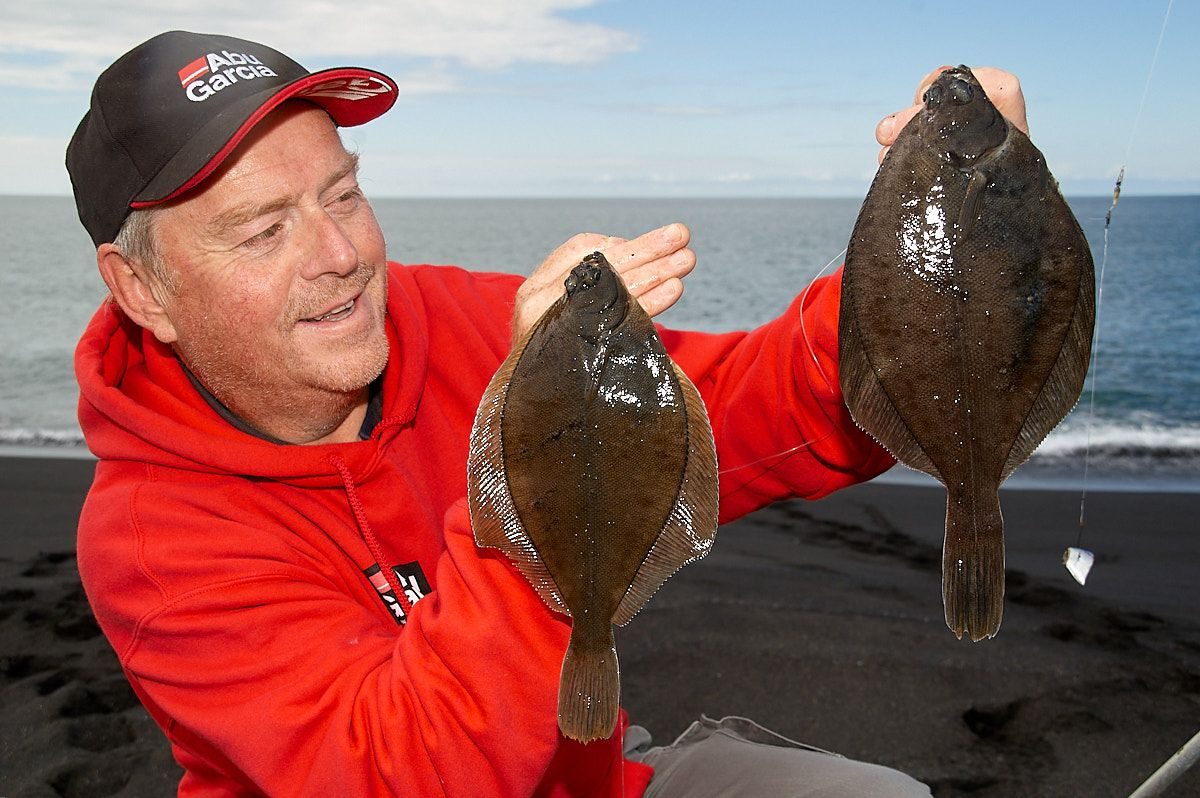
The dab is a right-eyed flatfish, lying with both eyes on the right side of the body, which is the upper surface. The body is oval and relatively small, with a single long dorsal fin and matching anal fin running most of its length.
The upper surface is a sandy brown to yellowish-brown, usually with scattered darker speckles, and the underside is plain white. The defining identification feature is the lateral line, which curves sharply over the pectoral fin before straightening to run to the tail – a more pronounced curve than in the very similar flounder. The skin of the upper surface is rough to the touch, which is where the species gets its Latin name limanda (from the Latin for file or rasp).
It is most easily confused with the plaice, but the dab lacks the plaice’s distinctive orange-red spots, is smaller-bodied, and the rough skin settles the matter at a touch.
Distribution
The dab is found throughout the north-eastern Atlantic from the Bay of Biscay north to Iceland and Norway, and into the Barents and White seas. It also occurs in the Baltic. Around the British Isles it is widespread and common on all coasts where suitable clean, sandy ground exists.
Habitat
A clean-ground species that lives on sandy and occasionally gravelly seabeds, from around 20 m down to 150 m, with the heaviest concentrations typically between 20 m and 100 m. Dab move inshore in numbers as water temperatures fall in autumn, and this inshore migration is what drives the reliable winter shore fishing.
Diet
Dabs feed mainly on small crustaceans, worms, molluscs and other small bottom-living invertebrates, picked off the sandy seabed with their small but capable mouths. They are particularly fond of sandhoppers, small crabs and brittle stars, along with the worms that live just below the surface of clean sand.
History
The dab has been a recognised and appreciated food fish for centuries. The flesh is white, sweet and fine-textured, considered by many to be the best eating of all the small flatfish, and it has been sold in British fish markets and on fishing piers for as long as records exist.
Commercially it is caught as part of the mixed inshore flatfish fishery, particularly in the North Sea. Despite sustained commercial and recreational fishing it is assessed as Least Concern, benefiting from a fast growth rate for a flatfish and a large geographic range.
Interesting Facts
Despite its modest size the dab lives for up to twelve years, though most caught are considerably younger.
It matures relatively early for a flatfish, typically by two to three years old, which helps it sustain fishing pressure more effectively than slower-maturing species like turbot or halibut.
The name “dab” is first recorded in late sixteenth-century English, but its etymology remains uncertain – it may derive from a Middle English word meaning something flat or to strike lightly, though the connection is not definitively established.
For rigs, seasonal timing and the best beaches, see our How to Catch Dabs guide.