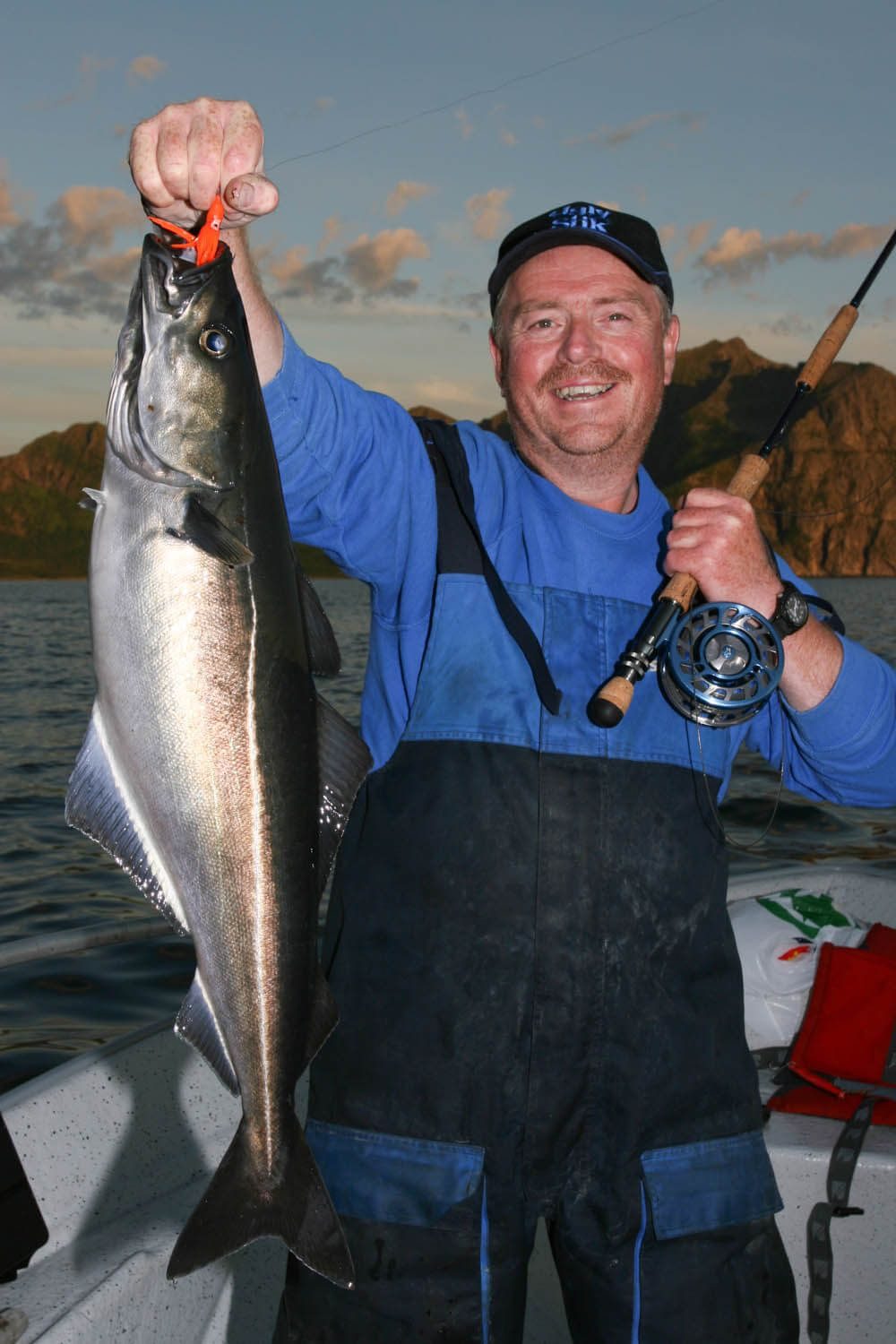
Often dismissed in the south as a nuisance “pollack-in-school-uniform”, the coalfish is in truth one of the hardest-fighting fish a UK or Irish angler can hook, and in the north it is a genuine sporting prize. Streamlined, fast and built like a torpedo, it pulls far above its weight. This guide looks at the coalfish as a species, away from the rods and reels.
Identification
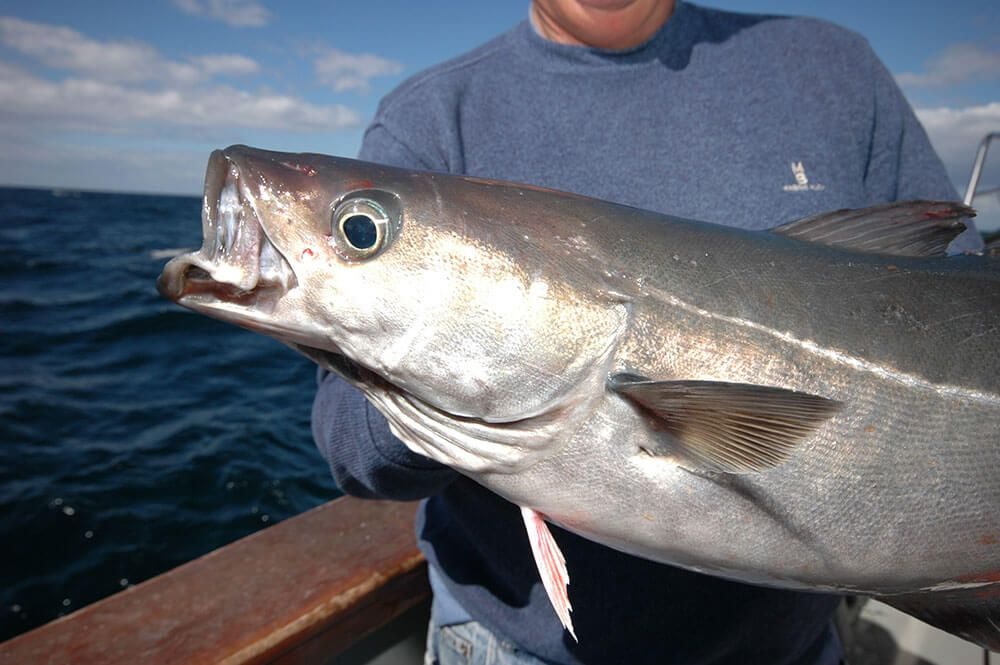
The coalfish is a sleek, streamlined fish, very similar in shape to the pollack but distinguished by a few clear features. The upper and lower jaws are roughly equal in length, with none of the pollack’s pronounced underbite, and there is a small barbel on the chin.
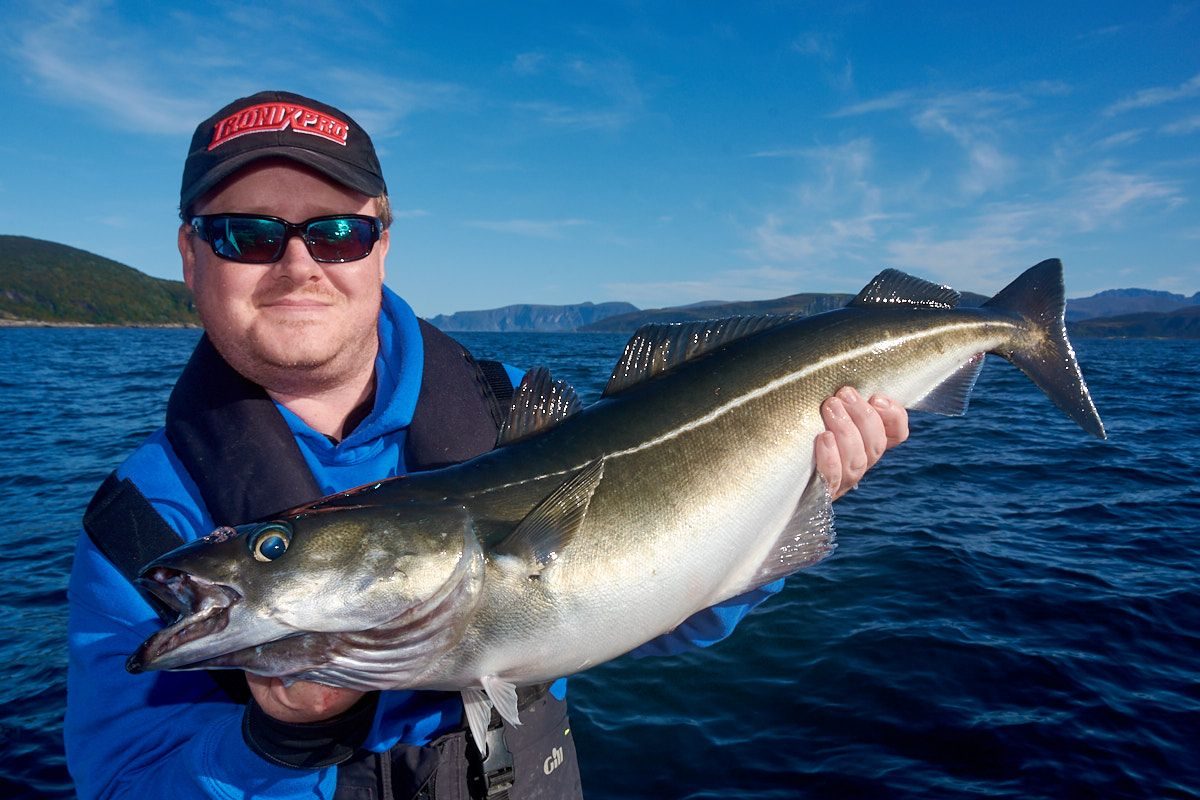
The most reliable identifier is the lateral line, which in the coalfish is straight and pale, running cleanly down the flank – the opposite of the pollack’s dark, curved line.
Colour is a dusky greenish-brown to near-black on the back, giving the fish its “coal” name, with silvery flanks and a white belly. The dark back and straight white lateral line are the quickest way to tell a coalfish from a pollack on the deck.
Distribution
The coalfish occurs on both sides of the North Atlantic and is most common in the colder, northern parts of its range, extending south to the Bay of Biscay.
Around the British Isles and Ireland it is widespread, but numbers and average size increase sharply the further north you go. Off north-east England and throughout Scotland it is a major species, while in the south it is more often the small, fast “school” coalfish that pester baits intended for other fish.
Habitat
Coalfish are an active, gregarious, benthopelagic species, found both inshore and well offshore. Juveniles live close to shore, particularly around rocky ground, harbours and piers, before moving into deeper water as they grow.
There is a clear seasonal pattern: the fish typically push into coastal waters in spring and retreat to deeper offshore ground – down to around 350 m – through the winter. The largest specimens are wreck and deep-reef fish, where they shoal in numbers and grow to serious sizes.
Diet
The coalfish is, above all, a fish-hunter. Its diet is dominated by herring, sandeel, sprat and small mackerel, which it pursues in fast, mobile shoals through the water column.
It will also drop down to the seabed to take crustaceans and marine worms, but the fast-swimming, fish-eating habit defines the species. This is why coalfish hit lures so hard and why they so often intercept baits and lures on the drop, well up off the bottom, before a slower fish gets a look in.
History
Coalfish has long been an important commercial species across northern Europe, where it is usually marketed as saithe or coley. Its flesh is darker and coarser than that of cod or haddock – hence the historic reputation as a lesser table fish – but it is plentiful, cheap and increasingly promoted as a sustainable alternative to premium whitefish.
The fishery is carefully managed, with the EU and Norway operating a precautionary approach built on annual catch limits and minimum mesh sizes to protect smaller fish. Stocks are generally in good shape, and the species is assessed as Least Concern.
Interesting Facts
Pound for pound, the coalfish is among the hardest-fighting fish in British and Irish seas. A big “saithe” hooked over a deep wreck fights with a dogged, powerful surging that regularly fools anglers into thinking they have hooked something far larger.
The fish collects an unusual number of regional names. Young fish are podleys or cuddies in Scotland and northern England, billet elsewhere, and in North America the species is sold as “Boston bluefish” – all the same fish at different ages and in different markets.
A large female is hugely productive, releasing anywhere from half a million to nine million eggs depending on her size, and the fish does not reach maturity until somewhere between four and nine years old.
The rod-caught world record, a fish of 50 lb 1 oz, came from the famous tidal race at Saltstraumen in Norway – a reminder of just how big this species can grow in the right water.