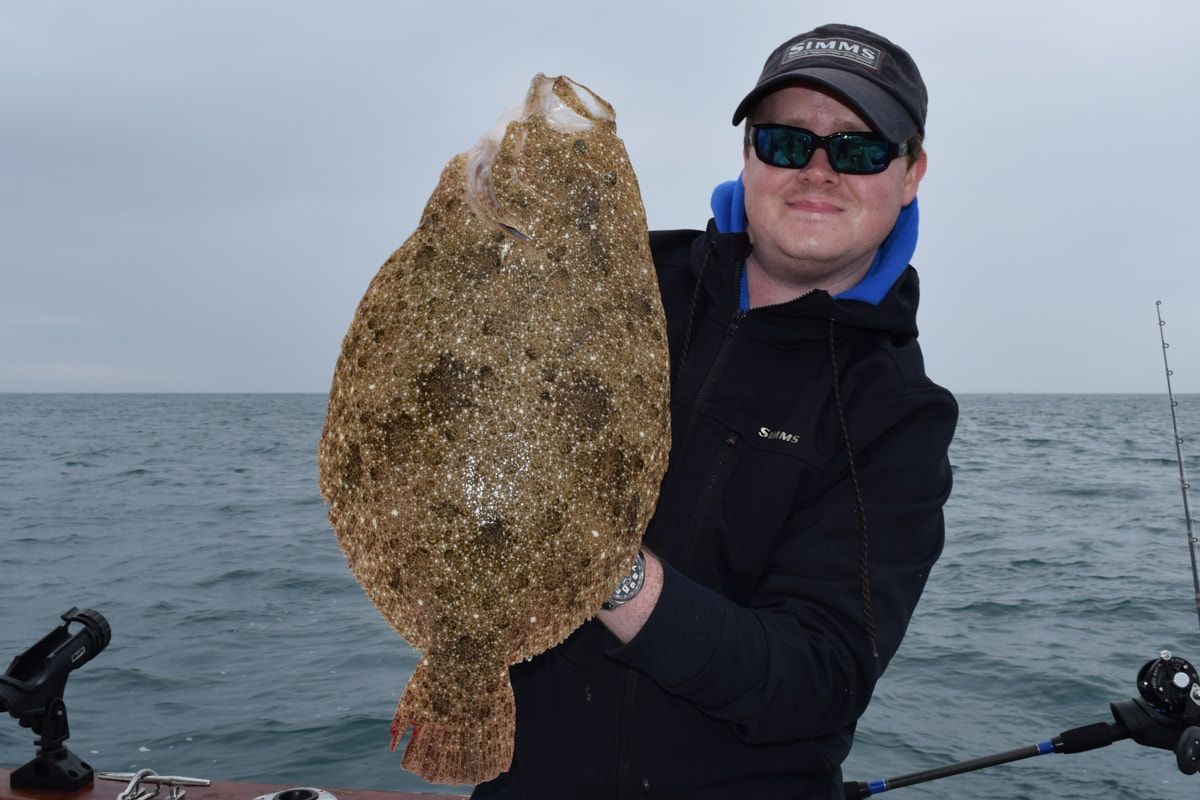
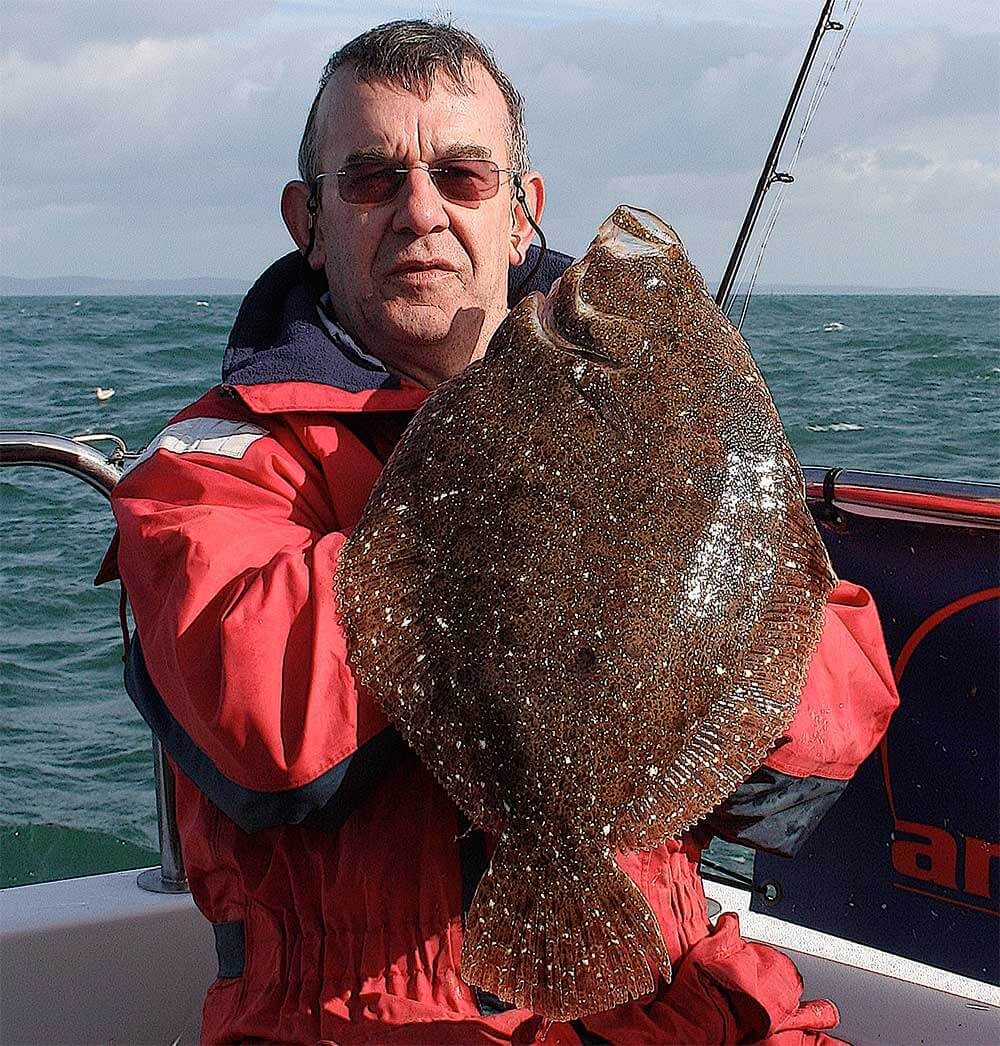
The brill is the second-largest flatfish in British and Irish waters – a fast, athletic, predatory species that lies in ambush on clean ground and fights harder for its size than almost any other flatfish. It is handsome, excellent eating and increasingly targeted by anglers who know how to find it. This guide looks at the brill itself.
Identification
The brill is a left-eyed flatfish – both eyes are on the left side of the body when viewed from above, the same side as the turbot – and has an oval to rhombus-shaped body that is wide and rather rounded at the front but tapers toward the tail.
The most reliable way to separate it from the turbot is the absence of bony tubercles (hard, wart-like bumps) on the upper surface. The turbot is covered with them; the brill’s skin is smooth. The brill also has a fringe of small fleshy lobes along the base of the dorsal fin.
Colouring on the upper surface is typically a sandy, brownish grey with darker speckling and an irregular mottled pattern, paler toward the edges; the underside is white. The lateral line makes a prominent curve above the pectoral fin.
Distribution
The brill is found in the eastern Atlantic from the Shetlands and the southern coasts of Iceland and Norway south to Senegal, and throughout the Mediterranean. It is found all around the British Isles and Ireland, with the strongest populations in the south and west.
Habitat
Clean sandy, gravelly and mixed ground, typically from the shallows down to around 75 m, though recorded deeper. Brill favour the same clean, firm ground as turbot, particularly shallow sandbanks, tidal races over sandflats and the clean ground around sandbank edges where currents push food.
Diet
The brill is an active, fast-moving predator for a flatfish. It feeds mainly on fish – sandeels, sprat, small herring, small pouting and other flatfish – rather than the crustacean-based diet of many other flatfish. This is partly what makes it such a strong fighter: it is built to intercept fast-moving prey.
History
The brill has always been considered an excellent table fish and has a long history of commercial and recreational fishing. In Victorian times it was a premium market fish in London and the large fishing ports, caught in quantity on the southern and western grounds.
For anglers it has tended to be caught less deliberately than turbot, since the two share similar ground and tactics, but dedicated brill fishing with sandeels and small fish over clean sandy ground has a devoted following.
Interesting Facts
The brill is considerably faster and more athletic than its reputation as a flatfish might suggest. It actively chases prey, and hooked fish will fight powerfully and make several strong runs – something that surprises anglers expecting the flat, dogged resistance of a dab or plaice.
Despite sharing very similar habits and habitat with the turbot, the brill and turbot sit in different genera and are not as closely related as their similar lifestyle implies.
For how to find and catch them, see our How to Catch Brill guide.